How to Choose the Best Sex Toy Material: A Complete Guide to Safety, Comfort & Durability
Introduction
When shopping for a sex toy, most people focus on its shape, features, or vibration patterns. However, one factor has a much greater impact on both safety and overall experience: the material.
The material determines how a toy feels against the skin, how easy it is to clean, how durable it will be, and whether it is suitable for long-term use. Choosing the right material can improve comfort, simplify maintenance, and reduce hygiene concerns.
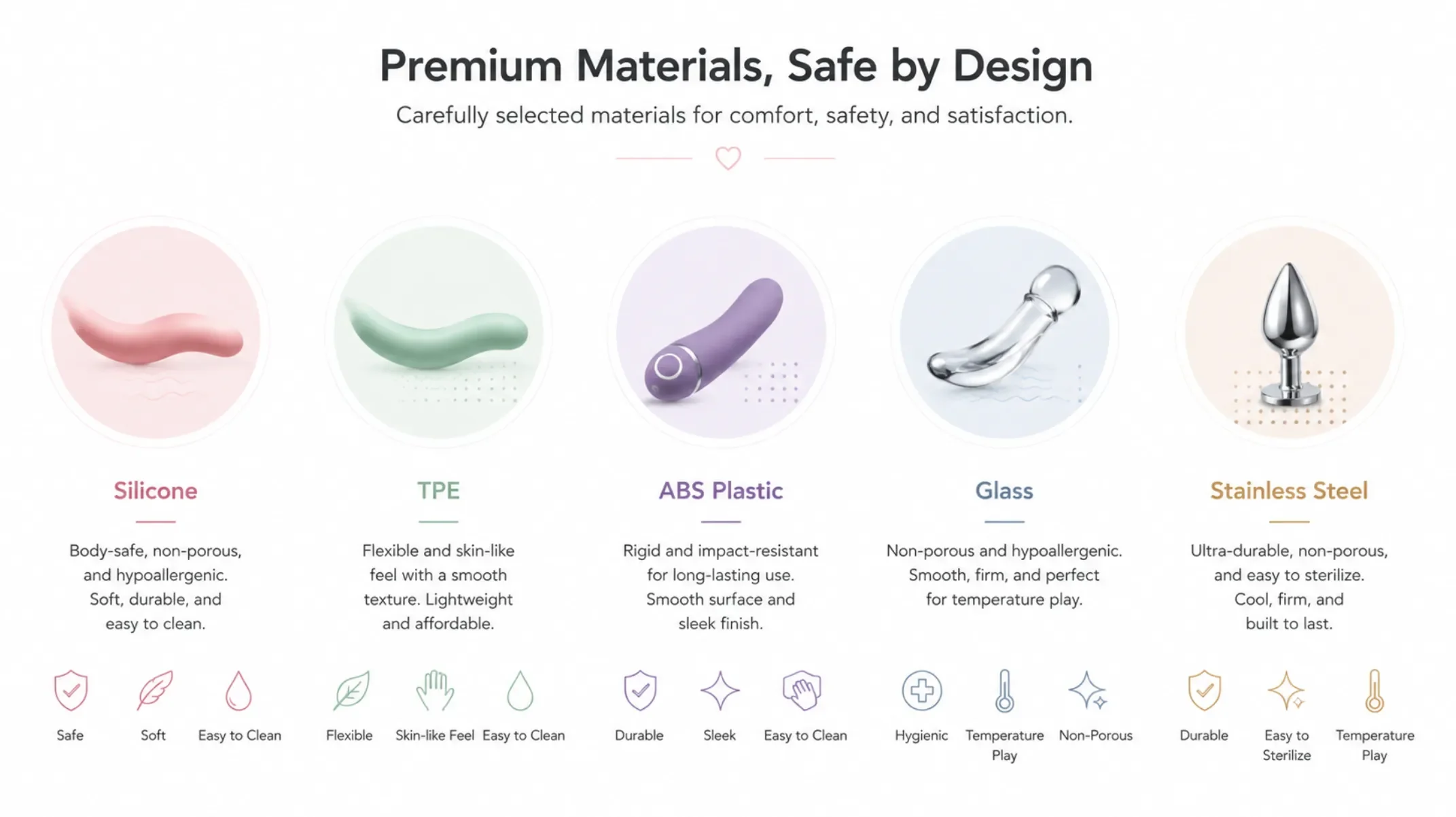
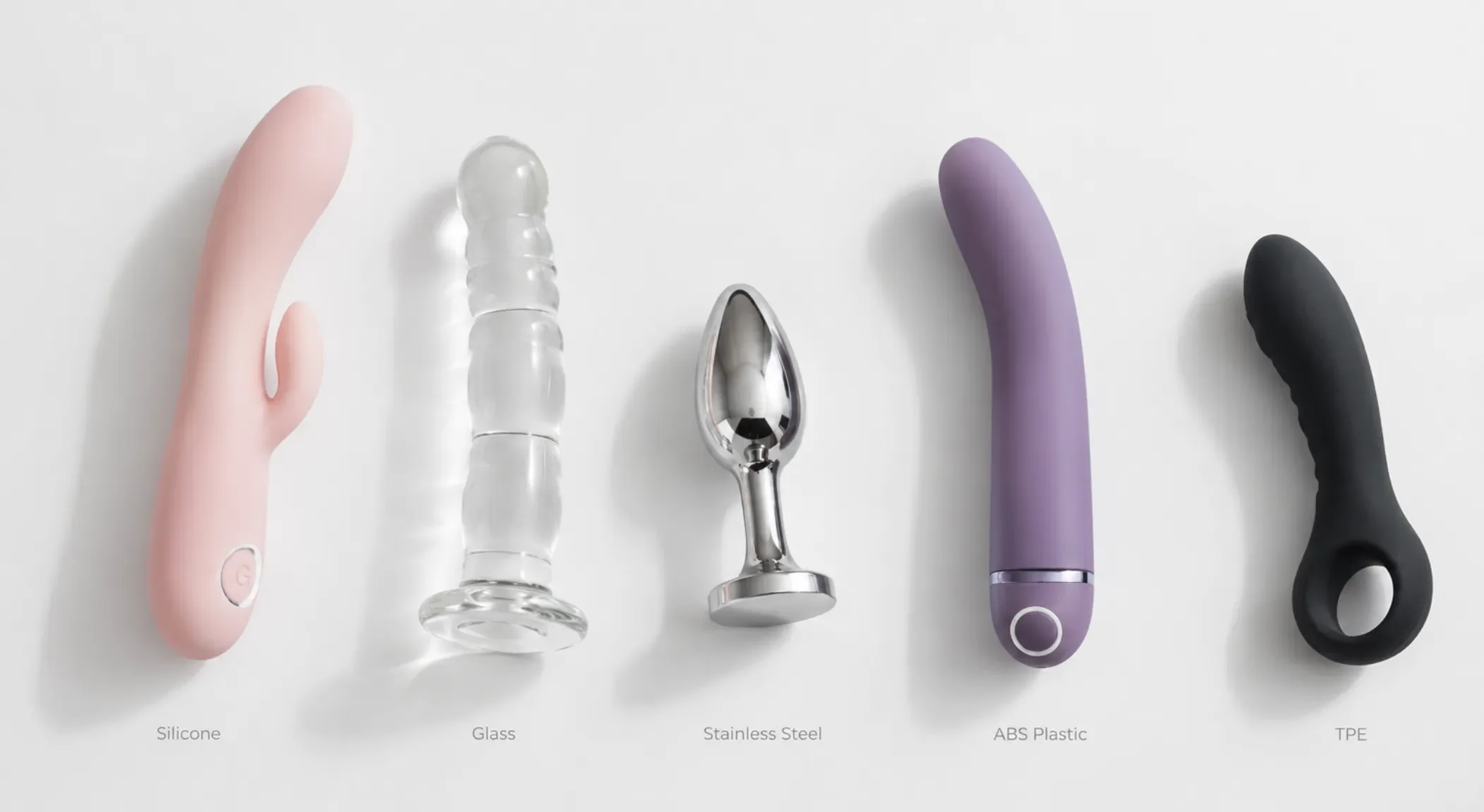
Today's reputable brands commonly use materials such as medical-grade silicone, TPE, ABS plastic, borosilicate glass, and stainless steel. Each has its own strengths, drawbacks, and ideal use cases.
This guide explores the evolution of sex toy materials, explains what makes a material body-safe, compares today's most common options, and helps you choose the one that best fits your needs.
A Brief History of Sex Toy Materials
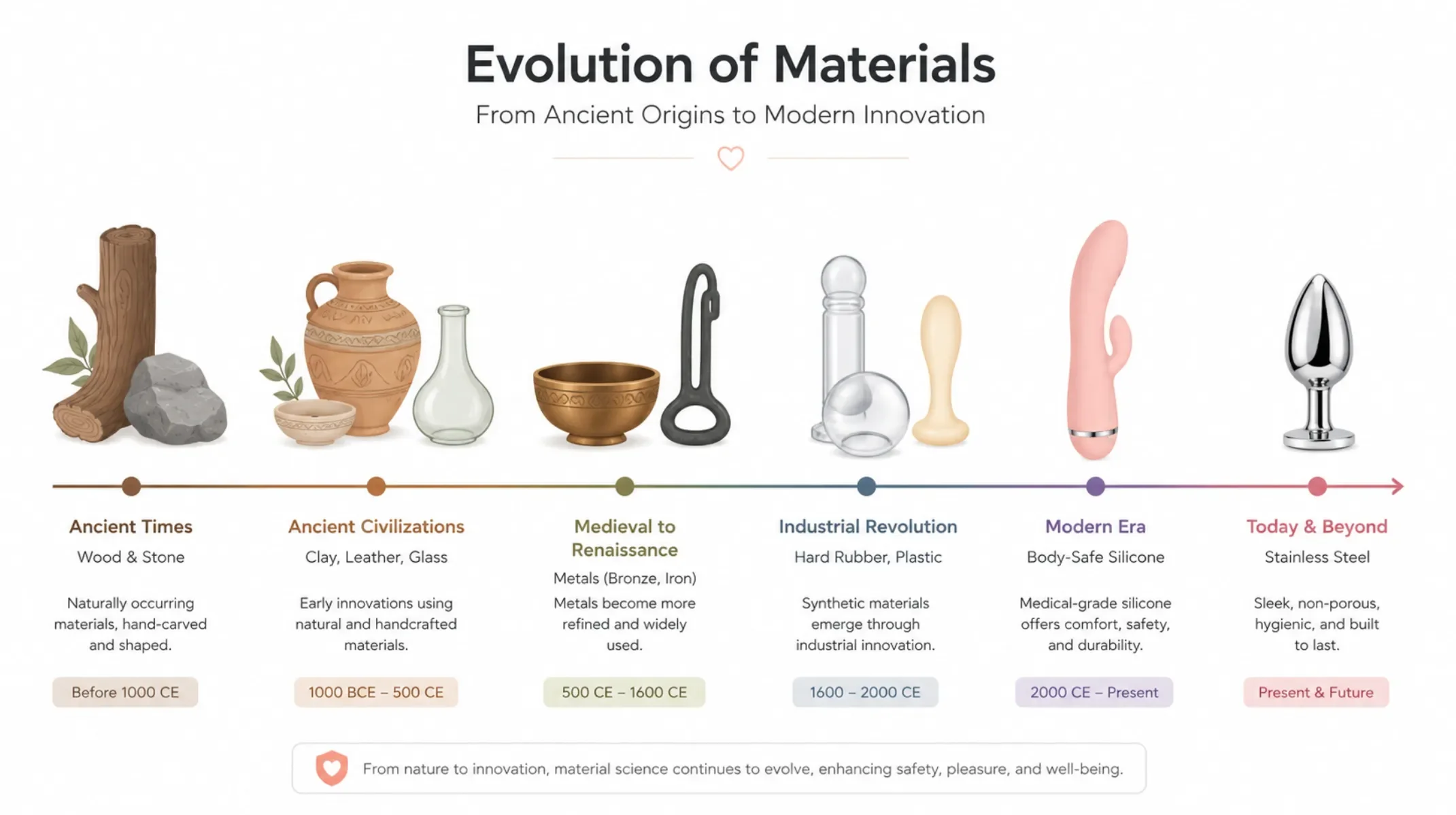
Sex toys are far from a modern invention. Historical records suggest that intimate objects have been used for hundreds—and in some cases thousands—of years.
Early versions were crafted from natural materials such as:
- Wood
- Stone
- Bone
- Ivory
- Leather
- Metal
While these materials were readily available, they often lacked comfort and were difficult to clean. Rough surfaces, heavy weight, and limited manufacturing techniques made them less hygienic than modern products.
During the 20th century, synthetic materials such as rubber and PVC became popular because they were inexpensive and easy to manufacture. However, some older plastics contained chemical plasticizers, including phthalates, which later raised health and safety concerns.
As consumer awareness increased, manufacturers shifted toward higher-quality, body-safe materials, including:
- Medical-grade silicone
- Platinum-cured silicone
- Borosilicate glass
- Stainless steel
- ABS plastic
Today, these materials are widely considered the industry standard among reputable brands because they offer better safety, durability, and hygiene.
What Makes a Sex Toy Material Body-Safe?
Not every soft or flexible material is automatically safe. A truly body-safe material should meet several important criteria.
Non-Porous Surface
Non-porous materials do not absorb moisture or bacteria, making them easier to clean and more hygienic.
Examples include:
- Medical-grade silicone
- Borosilicate glass
- Stainless steel
- ABS plastic
Materials like TPE and TPR are considered slightly porous, meaning they require more careful cleaning and maintenance.
Free from Harmful Chemicals
Look for products labeled:
- Phthalate-Free
- BPA-Free
These labels indicate that the product does not contain certain chemicals commonly associated with older plastic materials.
Heat Resistance
Materials that tolerate higher temperatures are generally easier to sanitize thoroughly, helping maintain better hygiene over time.
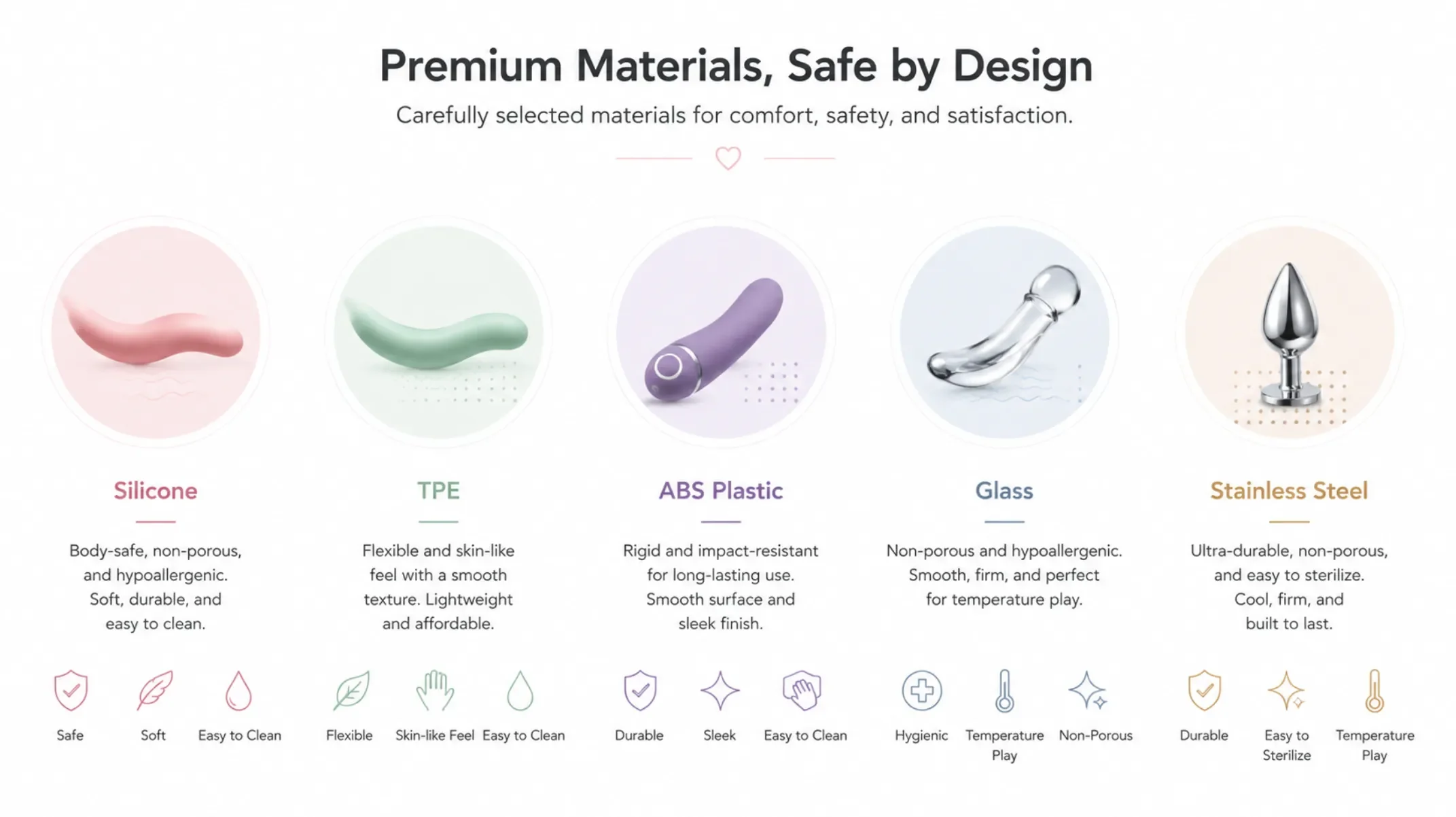
Modern Sex Toy Materials Explained
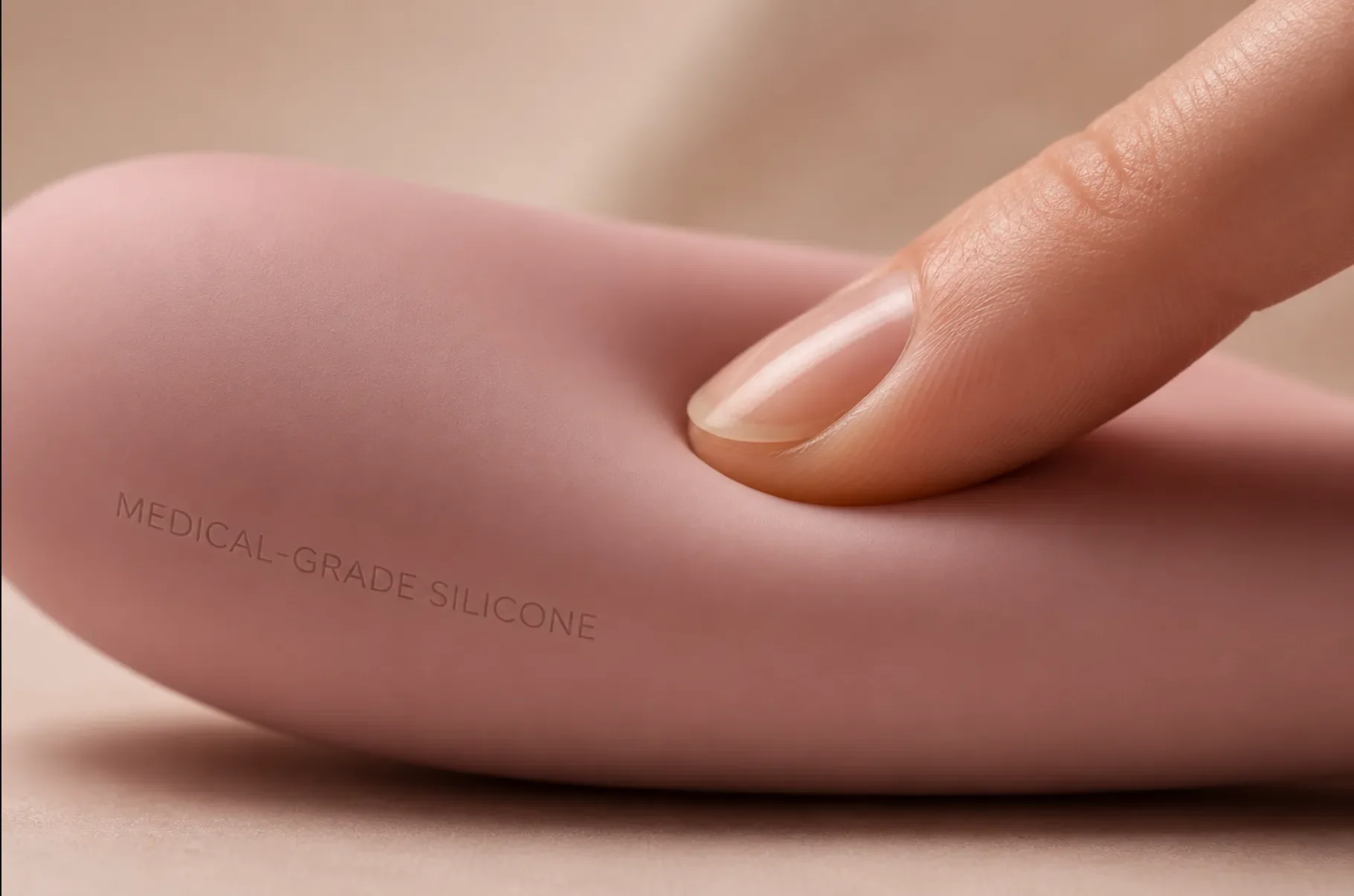
Medical-Grade Silicone
Pros
- Soft and comfortable
- Non-porous
- Long-lasting
- Easy to clean
- Suitable for sensitive skin
Cons
- Usually more expensive
- Not recommended for use with silicone-based lubricants unless the manufacturer states otherwise
Best For
- Beginners
- Couples
- Everyday use
- Most users seeking a balance of comfort and safety
TPE
Pros
- Affordable
- Very soft
- Realistic skin-like texture
Cons
- Slightly porous
- Requires more maintenance
- May wear out faster than silicone
Best For
- Budget-conscious buyers
- Users who prioritize softness

ABS Plastic
Pros
- Durable
- Non-porous
- Easy to clean
- Excellent for transmitting vibration
Cons
- Hard surface
- Less flexible than silicone
Best For
- Vibrators
- Entry-level products
Borosilicate Glass
Pros
- Completely non-porous
- Compatible with temperature play
- Elegant appearance
- Extremely easy to sanitize
Cons
- Heavier than silicone
- Can break if dropped onto hard surfaces
Best For
- Experienced users
- Temperature play
- Luxury products
Stainless Steel
Pros
- Extremely durable
- Fully non-porous
- Excellent temperature conductivity
- Can be thoroughly sanitized
Cons
- Higher price
- Heavy weight
Best For
- Experienced users
- Precision pressure
- Temperature play

Sex Toy Material Comparison
| Material | Body Safety | Softness | Durability | Cleaning | Price |
|---|---|---|---|---|---|
| Medical-Grade Silicone | Excellent | Excellent | Excellent | Excellent | $$$ |
| TPE | Good | Excellent | Moderate | Moderate | $$ |
| ABS Plastic | Excellent | Low | Excellent | Excellent | $$ |
| Borosilicate Glass | Excellent | Hard | Excellent | Excellent | $$$ |
| Stainless Steel | Excellent | Hard | Excellent | Excellent | $$$$ |
Which Material Is Right for You?
The best material depends on your personal preferences, experience, and budget.
If You're a Beginner
Medical-grade silicone is usually the safest and most versatile option. It offers a soft feel, simple maintenance, and long-lasting durability.
If You're Shopping on a Budget
TPE products are often less expensive while still providing a comfortable experience. Just be prepared to clean and replace them more frequently.
If You Have Sensitive Skin
Choose non-porous materials such as medical-grade silicone, glass, or stainless steel from reputable manufacturers.
If You Enjoy Temperature Play
Glass and stainless steel respond well to warm and cool temperatures, offering sensations that softer materials cannot.
If You Want Maximum Durability
Silicone, glass, and stainless steel generally last much longer than softer porous materials when properly maintained.
How to Use Different Materials Correctly
Different materials benefit from different care and usage practices.
- Silicone toys generally pair best with water-based lubricants.
- TPE toys should be cleaned immediately after use and stored in a dry environment.
- Glass and stainless steel can be warmed or cooled gradually for temperature play.
- Always inspect your toy before use. If you notice cracks, tears, discoloration, or unusual odors, discontinue use and replace it if necessary.
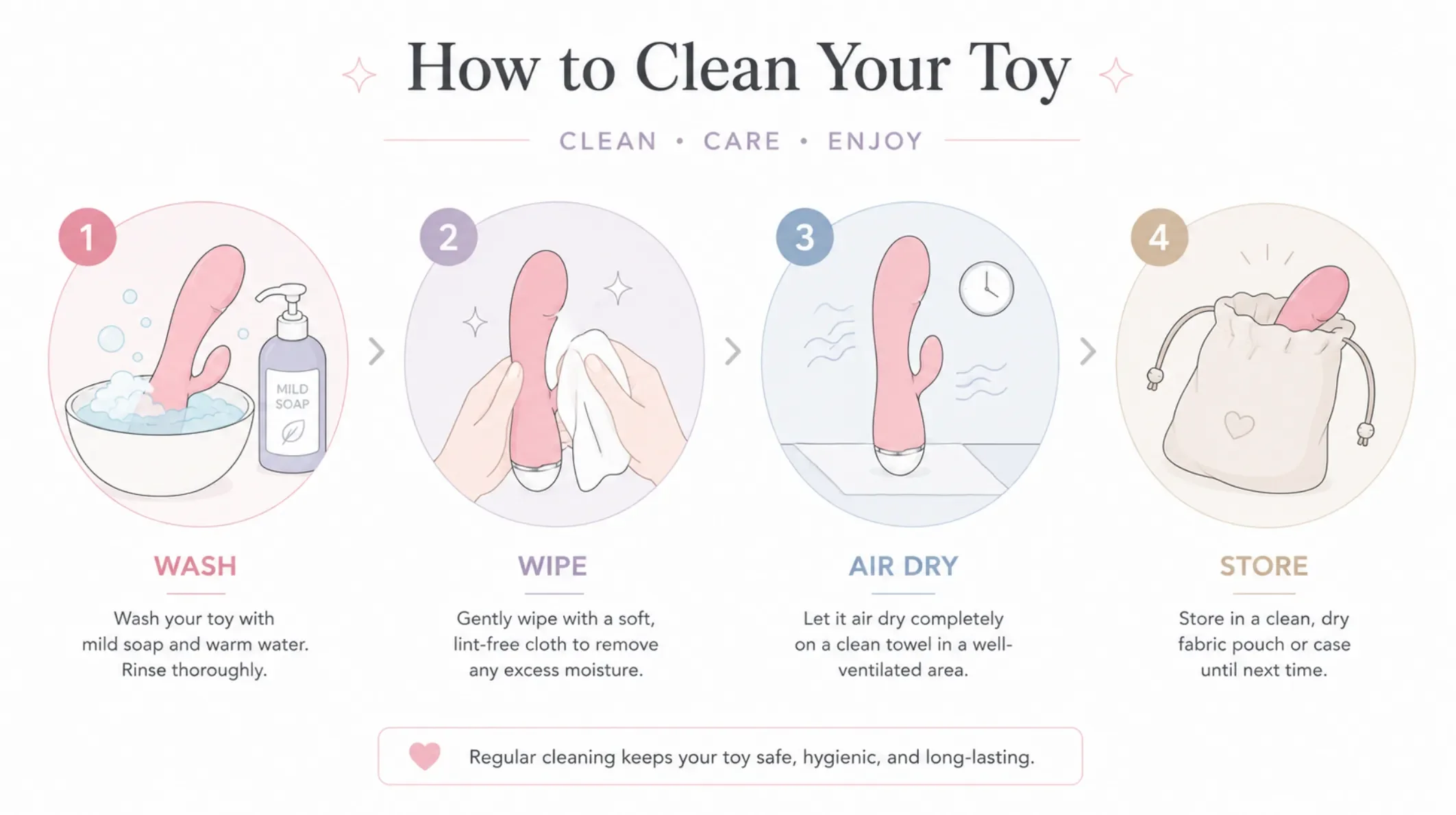
How to Clean and Store Different Materials
Proper maintenance helps extend a toy's lifespan while supporting good hygiene.
General recommendations include:
- Wash with warm water and mild soap or a dedicated toy cleaner.
- Dry thoroughly before storage.
- Store toys separately to avoid material reactions or surface damage.
- Keep them in a cool, dry place away from direct sunlight.
- Use individual storage bags whenever possible.
Common Safety Tips and Mistakes to Avoid
Keep these best practices in mind regardless of the material you choose:
- Buy from reputable brands with clear material information.
- Avoid products made from unidentified or suspiciously cheap materials.
- Use the lubricant recommended for your toy's material.
- Replace toys that become cracked, sticky, or damaged.
- Clean toys before and after every use.
- Follow the manufacturer's care instructions whenever available.
Frequently Asked Questions
What is the safest material for sex toys?
Medical-grade silicone, borosilicate glass, stainless steel, and high-quality ABS plastic are generally considered among the safest materials because they are non-porous and easy to clean.
Is TPE safe?
High-quality TPE can be safe when purchased from reputable brands and maintained properly. Because it is slightly porous, it requires more careful cleaning than non-porous materials.
Can glass sex toys break?
Borosilicate glass is designed to resist thermal shock and everyday use, but it can still break if dropped onto a hard surface or subjected to significant impact.
Why is medical-grade silicone so popular?
Medical-grade silicone combines comfort, durability, flexibility, and excellent hygiene, making it one of the most recommended materials for both beginners and experienced users.
Final Thoughts
The material of a sex toy has a significant impact on its comfort, safety, maintenance, and longevity. Understanding the differences between silicone, TPE, ABS plastic, borosilicate glass, and stainless steel allows you to make a more informed purchase.
For most people, medical-grade silicone offers the best balance of softness, safety, durability, and ease of cleaning. Glass and stainless steel provide premium options for users interested in temperature play or long-term durability, while TPE remains a practical choice for those seeking a softer feel at a lower price.
By choosing body-safe materials and following proper cleaning and storage practices, you can enjoy a safer, more comfortable, and longer-lasting experience.